This is a simple question, but it’s surprising how often I get asked.
There are two likely reasons for the out of state vendor not charging you use tax:
1. They don’t know anything about what’s taxable in your state. All they know is that, if that if they’ve shipped it out of their state, they don’t have to worry about it.
2. They don’t collect taxes in your state because they’re not registered. You may think they should be, since you constantly see their sales rep in your office, but you’re not going to win that argument (unless you’re Walmart). And frankly, it’s not really a problem. You just accrue the use taxes and have a nice day. You’re always going to have to accrue some use taxes, so just systematize the process and you’ll be fine.
By the way, if you have “demanded” that the vendor start charging tax, how do you know they’re charging the correct state tax? They may be charging the tax for their state (which is generally wrong). Or they might “say” they’re charging your state’s tax, just to keep you happy. They might just be pocketing the extra billings.
Hey, it happens. If you’re going to demand that the vendor charge tax, and they do, make them give a copy of their permit for your state to make sure they really are doing it right.
The Sales Tax Guy
http://salestaxguy.blogspot.com
See the disclaimer - this is for education only. Research these issues thoroughly before making decisions. Remember: there are details we haven't discussed, and every state is different. Here's more information
Get these articles in your inbox - subscribe at http://salestaxguy.blogspot.com
Don't forget our upcoming seminars and webinars.
http://www.salestax-usetax.com/
Showing posts with label Jurisdiction. Show all posts
Showing posts with label Jurisdiction. Show all posts
Wednesday, October 06, 2010


Tuesday, February 16, 2010
So, what state do I worry about?
A variation on this question came up in a telephone conversation yesterday. And it comes up so often, that I apologize to all of you for not addressing it sooner.
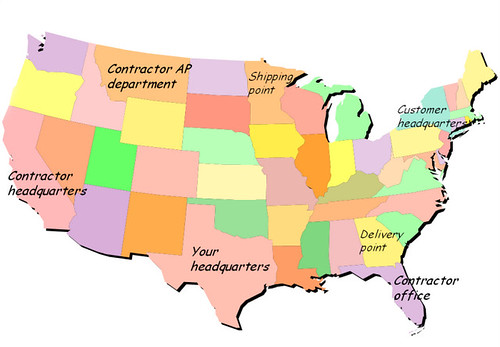
Here's the scenario:
Your company is headquartered in Austin, Texas.
The customer is headquartered in Albany, New York.
The contractor, who has been hired by the customer, orders the goods from you while sitting in their field office in Jacksonville, Florida.
You ship the goods from your manufacturing plant in St. Paul, Minnesota to the job site in Folkston, Georgia.
The contractor is headquartered in Redding, California.
The contractor's AP department is in Helena, Montana.
Which state gets the sales tax or use tax?
Here's a hint.
It isn't New York, Texas or California. The location of the corporate headquarters is so irrelevant, it isn't funny.
It's not where it was ordered from. Again, not relevant.
A very common misconception is that the billing address is somehow important. It isn't. AP folks often screw this up and base their assumptions on the taxing rules in their state. And since Montana has no sales tax, that must mean that everything the contractor buys is not taxable. Right? Wrong.
Another common mistake is to tax the transaction based on where it was shipped from. Wrong. The ship from state is irrelevant.
By process of elimination, we've narrowed it down to one state - Georgia. And that is the state that has jurisdiction. Because they are the state where the goods were received and taken control of by the buyer. And since it was an interstate sale, there can't be any sales tax. So use tax is owed to Georgia by the buyer.
Unless...
...you have nexus in Georgia. Maybe, for example, you have an engineer who regularly visits job sites in Georgia to help spec out projects and assist with installations. Then you'll have to bill the Georgia use tax on the invoice and remit the money to Georgia. Even though you're in Texas.
But no matter who has to pay the tax, the only state that gets the tax is Georgia. Because Georgia is where the delivery occurred.
So the next time you're dealing with a transaction involving multiple states, it's really pretty easy to figure out the state you have to be concerned about. Just ask yourself, where was the delivery point?
The Sales Tax Guy
http://salestaxguy.blogspot.com
See the disclaimer - this is for education only. Research these issues thoroughly before making decisions.
Here's information on our upcoming seminars and webinars. Don't forget, we just announced our February to April schedule!
http://www.salestax-usetax.com/
Picture note: the image above is hosted on Flickr. If you'd like to see more, click on the photo.
Tuesday, February 02, 2010
Make your vendors prove they're registered
 It's generally required that sellers get certificates from their customers to make sure they really are buying something for resale, or there's some other reason that they don't have to pay sales tax.
But I want you to think about reversing the situation. I want you to start asking your vendors, who are charging you sales or use tax, for proof that they are registered in your state. Huh?
Whether this is a problem in your state is a function of how the laws are written, where the responsibilities lie, and how sharp the auditors are. So if you don't want to take my advice, that's fine. Just make sure that you know you're off the hook.
Let's say that Mary has just shipped you some new ladders from the "land of ladders," Wyoming.
Mary has charged you 6% tax, which is also the rate in your state, oh, Maine. [I'm just making the states up as I go along, folks.]
Any reason not to pay this?
The answer is yes! If you received the goods in Maine, then Maine tax applies. How do you know that Mary is collecting Maine tax? After all, she's far away in Wyoming.
"Well, they're charging me the Maine rate. I've got a calculator right here."
The average rates in the US range from about 5 to 9%. This means there's a chance that someone shipping from out of state is going to be charging your tax rate, without any assurance that your state is getting the money.
There's an easy solution. Call the vendor (Mary) and ask her a two part question. First, what state's tax is she charging? You may be amazed at how often her response is, "We're charging Wyoming's tax. What tax did you think we were charging?" If that's her response, then please refer Mary to this blog. And don't pay her the tax. Pay it directly to Maine as use tax.
Alternatively, Mary may respond, "Let's see. You're in Maine. Yep, we're charging you Maine tax." You may think that solves the problem. But you should ask the second question.
"Can you send me a copy of your Maine reseller permit please?"
"What do you mean?"
"Well, if you're charging Maine tax, then you must be registered in Maine to remit that tax properly. We like to make sure of that, so please send me a copy of your permit. You can fax it if you'd like."
"Uh, we're not registered in Maine."
"Then what did you mean when you said you were collecting Maine tax?"
"Oh, we just look up the rate on the web and charge you that. But we send the money to Wyoming."
Hand on my heart, I've heard a variation on that story quite a few times. I couldn't make it up.
Again, tell Mary about this blog. Please. And don't pay her the tax. Pay it directly to Maine as use tax.
Why do you care what tax is charged?
The first answer is universal. Does your state have budget problems? Wouldn't you prefer that any taxes you pay go to the appropriate state, like yours? Asking those questions makes sure Maine gets the money instead of those guys in Wyoming.
The second answer brings up a nastier and more painful possibility. If you get audited, and the auditor comes across the invoice from Mary in Wyoming, and he does a particular test, he'll discover that Mary isn't registered in Maine. That means Maine never got any tax revenue. Which means that Maine will make you pay that money again - to Maine. And good luck getting that money back from Mary in Wyoming.
The test that the auditor runs is to take some of your out of state vendors who have charged tax, and simply check to see if they're in the state's registered vendor database. If they're not in the database, there's gonna be trouble.
But you can do essentially the same test by simply getting the permit from any of these types of vendors. And if you can show the auditor that you're doing that check, they will probably be seriously impressed. Which is nice.
Here's the action item: Whenever you are charged tax in a significant amount by a vendor shipping from out of state, get a copy of their registration permit for the delivery state.
I don't normally recommend you do this for vendors that are in your state. Your risk is pretty small. But tomorrow I'll tell you about one case where it made sense to check.
Finally, a question that comes up is "What if they put the state on the invoice next to the tax? Doesn't that show they're really charging Maine tax properly?" Nope. You want to see the permit. That's another story!
The Sales Tax Guy
http://salestaxguy.blogspot.com
See the disclaimer - this is for education only. Research these issues thoroughly before making decisions.
Here's information on our upcoming seminars and webinars. Don't forget, we just announced our February to April schedule!
http://www.salestax-usetax.com/
Wednesday, January 20, 2010
Where did the sale occur? (Part 3)
This is part of a mini-course on the two major types of sales (intrastate and interstate) and their impact on sales tax and use tax.
This is part 3. Here is part 2. Please start this series with part 1.
When last we left our hero, the great state of Texas, they were just trying to get their money from somebody. As we saw in part 2, there was a good chance that Brad wouldn't pay the use tax on the motor he bought from Jennifer because he was, well, stupid. We'll give him the benefit of the doubt. He just didn't know.
But maybe Texas can get Jennifer to collect it from Brad. Maybe.
To refresh your memory, here's the transaction:
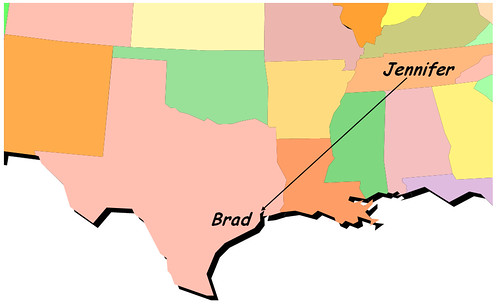
The problem for Texas, as things stand, is that they can't make Jennifer collect tax from Brad. They can't make Jennifer collect sales tax because of that darned Constitution that we mentioned in part 1. And they can't make Jennifer collect Brad's use tax because Jennifer is in Tennessee! She isn't in Texas. They have no jurisdiction over her.
Now there are a lot of situations where a state can reach across a border and grab someone by the collar. But this isn't one of them. Jennifer is in Tennessee. Based on what you know so far, Texas can't touch her.
So they're still out the taxes.
But wait!
Jennifer has a sales rep - John.
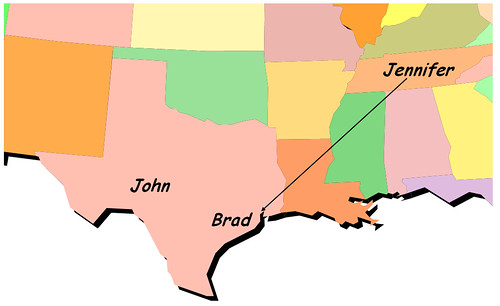
John visits Texas five or six times a year. He flies into Dallas, drives around for a few days and flies out of Houston. Now Jennifer is in trouble. John's physical presence in Texas gives Jennifer nexus in Texas. Texas can now make Jennifer collect the use tax from Brad and remit the money to Texas. Yay!
So to summarize:
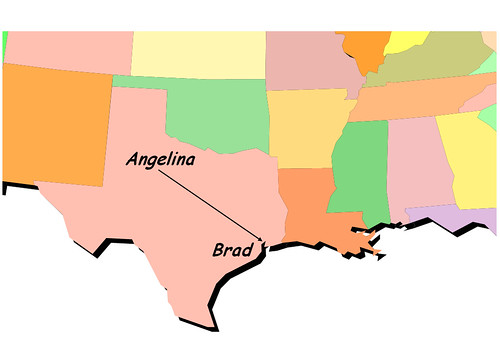
1. Angelina charged Brad sales tax because it was an intrastate sale in Texas.
2. Jennifer didn't have to charge Brad sales tax because it was an interstate sale and the Constitution restricts the ability of states to tax interstate commerce.
3. Brad owes tax on his use of the motor once he receives it in Texas
4. Brad probably isn't going to pay that use tax.
5. Texas would really like to get Jennifer to collect that use tax.
6. Which they can now do because Jennifer has a physical presence in Texas - nexus.
When the sale is intrastate, the tax that usually applies is sales tax
When the sale is interstate, the only tax that can apply is use tax.
And to answer the question that has lead all three of these articles, it's Texas. It was Texas when it was an intrastate sale. And it was Texas when it was an interstate sale because the only applicable tax in that situation is use tax. Which obviously can only be imposed in the state where Brad receives the goods. So the golden rule is that the state where the buyer receives the goods will be the state that imposes the tax.
Thank you for your patience. No more mini-courses for a while. Although, I like the maps. So you'll see those again. Real soon.
The Sales Tax Guy
http://salestaxguy.blogspot.com
See the disclaimer - this is for education only. Research these issues thoroughly before making decisions.
Here's information on our upcoming seminars and webinars.
http://www.salestax-usetax.com/
This is part 3. Here is part 2. Please start this series with part 1.
When last we left our hero, the great state of Texas, they were just trying to get their money from somebody. As we saw in part 2, there was a good chance that Brad wouldn't pay the use tax on the motor he bought from Jennifer because he was, well, stupid. We'll give him the benefit of the doubt. He just didn't know.
But maybe Texas can get Jennifer to collect it from Brad. Maybe.
To refresh your memory, here's the transaction:
The problem for Texas, as things stand, is that they can't make Jennifer collect tax from Brad. They can't make Jennifer collect sales tax because of that darned Constitution that we mentioned in part 1. And they can't make Jennifer collect Brad's use tax because Jennifer is in Tennessee! She isn't in Texas. They have no jurisdiction over her.
Now there are a lot of situations where a state can reach across a border and grab someone by the collar. But this isn't one of them. Jennifer is in Tennessee. Based on what you know so far, Texas can't touch her.
So they're still out the taxes.
But wait!
Jennifer has a sales rep - John.
John visits Texas five or six times a year. He flies into Dallas, drives around for a few days and flies out of Houston. Now Jennifer is in trouble. John's physical presence in Texas gives Jennifer nexus in Texas. Texas can now make Jennifer collect the use tax from Brad and remit the money to Texas. Yay!
So to summarize:
1. Angelina charged Brad sales tax because it was an intrastate sale in Texas.
2. Jennifer didn't have to charge Brad sales tax because it was an interstate sale and the Constitution restricts the ability of states to tax interstate commerce.
3. Brad owes tax on his use of the motor once he receives it in Texas
4. Brad probably isn't going to pay that use tax.
5. Texas would really like to get Jennifer to collect that use tax.
6. Which they can now do because Jennifer has a physical presence in Texas - nexus.
When the sale is intrastate, the tax that usually applies is sales tax
When the sale is interstate, the only tax that can apply is use tax.
And to answer the question that has lead all three of these articles, it's Texas. It was Texas when it was an intrastate sale. And it was Texas when it was an interstate sale because the only applicable tax in that situation is use tax. Which obviously can only be imposed in the state where Brad receives the goods. So the golden rule is that the state where the buyer receives the goods will be the state that imposes the tax.
Thank you for your patience. No more mini-courses for a while. Although, I like the maps. So you'll see those again. Real soon.
The Sales Tax Guy
http://salestaxguy.blogspot.com
See the disclaimer - this is for education only. Research these issues thoroughly before making decisions.
Here's information on our upcoming seminars and webinars.
http://www.salestax-usetax.com/
Monday, January 18, 2010
Where did the sale occur? (Part 2)
This is part of a mini-course on the two major types of sales (intrastate and interstate) and their impact on sales tax and use tax.
This is part 2. Here is part 1. Please start this series there.
Remember, from part 1, that Jennifer doesn't have to charge sales tax, for any state, on her interstate sale to Brad. The Constitution says so. The states can't tax interstate sales.
In this situation, the responsibility therefore falls to Brad to pay use tax to Texas. Texas is the state where Brad took control of the motor for the first time - where he used the motor for the first time. Therefore, Texas gets to impose use tax on his use of the motor.
But Texas also knows that Brad is unlikely to pay this use tax. If Brad is an individual, it'll never happen. But in this situation, Brad is a business.
The problem is that if Brad is a small entrepreneurial operation, he doesn't even know he's supposed to pay something called use tax. His accountant (if he has one) probably doesn't know. If Brad hired a bookkeeper or AP specialist to help him, they would probably know about the need to accrue use tax because they did it at their previous job. But Brad hasn't gotten to the point of hiring any experienced office staff yet, other than his sister-in-law. He's in start-up mode, and he's just trying to survive.
Many small businesses are just not going to pay their use tax.
Texas knows this. And they also know they can't make Jennifer collect sales tax from Brad, because of that durned Constitution (see above).
But maybe they can get Jennifer to collect the use tax from Brad. Use tax is not a sales tax. It's not a tax on the transaction, so the Constitution doesn't get in the way. And it is the tax that Brad owes, since there was no sales tax imposed. So why not make Jennifer collect use tax from Brad instead of the sales tax?
You would be right! They can make Jennifer collect the use tax from Brad.
Or can they?
See part 3
The Sales Tax Guy
http://salestaxguy.blogspot.com
See the disclaimer - this is for education only. Research these issues thoroughly before making decisions.
Here's information on our upcoming seminars and webinars.
http://www.salestax-usetax.com/
This is part 2. Here is part 1. Please start this series there.
Remember, from part 1, that Jennifer doesn't have to charge sales tax, for any state, on her interstate sale to Brad. The Constitution says so. The states can't tax interstate sales.
In this situation, the responsibility therefore falls to Brad to pay use tax to Texas. Texas is the state where Brad took control of the motor for the first time - where he used the motor for the first time. Therefore, Texas gets to impose use tax on his use of the motor.
But Texas also knows that Brad is unlikely to pay this use tax. If Brad is an individual, it'll never happen. But in this situation, Brad is a business.
The problem is that if Brad is a small entrepreneurial operation, he doesn't even know he's supposed to pay something called use tax. His accountant (if he has one) probably doesn't know. If Brad hired a bookkeeper or AP specialist to help him, they would probably know about the need to accrue use tax because they did it at their previous job. But Brad hasn't gotten to the point of hiring any experienced office staff yet, other than his sister-in-law. He's in start-up mode, and he's just trying to survive.
Many small businesses are just not going to pay their use tax.
Texas knows this. And they also know they can't make Jennifer collect sales tax from Brad, because of that durned Constitution (see above).
But maybe they can get Jennifer to collect the use tax from Brad. Use tax is not a sales tax. It's not a tax on the transaction, so the Constitution doesn't get in the way. And it is the tax that Brad owes, since there was no sales tax imposed. So why not make Jennifer collect use tax from Brad instead of the sales tax?
You would be right! They can make Jennifer collect the use tax from Brad.
Or can they?
See part 3
The Sales Tax Guy
http://salestaxguy.blogspot.com
See the disclaimer - this is for education only. Research these issues thoroughly before making decisions.
Here's information on our upcoming seminars and webinars.
http://www.salestax-usetax.com/
Wednesday, January 13, 2010
Where did the sale occur? (Part 1)
This is part of a mini-course on the two major types of sales (intrastate and interstate) and their impact on sales tax and use tax.
The sale occurs when two events have happened. It begins when the seller ships the goods. It ends the buyer receives the goods.
In this example, Angelina ships a motor to Brad. The sale begins when Angelina (the seller) does her job - when she ships it.
The sale ends when Brad (the buyer) takes control of the motor - when he receives it at his receiving dock.
Angelina ships it from Amarillo, Texas.
Brad receives it in Houston, Texas
The sale began in Texas. And it ended in Texas.
This is what is called an intrastate sale. It's a sale that happens within the state.
Intrastate sales are easy. You just charge sales tax (if you’re the seller). And if you’re the buyer, and the seller doesn’t charge you tax, ASK!
But let’s say that, instead of buying from Angelina, Brad decides to buy the motor from his old friend, Jennifer. She’s in Nashville. So Jennifer ships the motor to Brad in Houston.
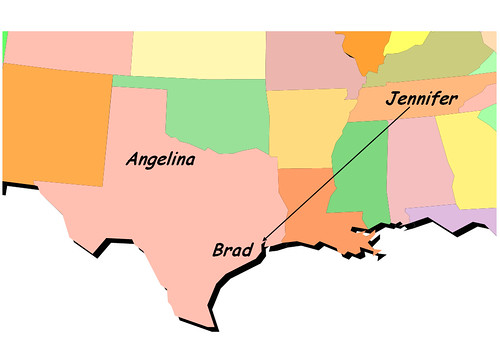
As you can see, the sale started in Nashville, Tennessee.
The sale still ended at Brad’s receiving dock in Houston, Texas.
This is called an interstate sale. The sale begins in one state and ends in another state.
Interstate sales are a problem. Because of this darned document.
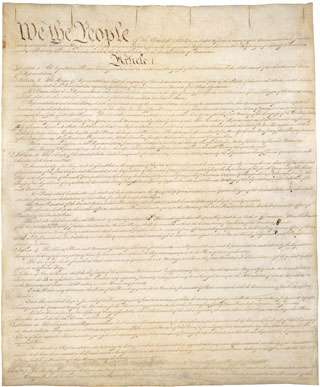
Article I, Section 8 of the Constitution for the United States of America says that
“The Congress shall have power …
…To regulate commerce with foreign nations, and among the several states, and with the Indian tribes;”
According to the courts, this essentially means that, with a couple of exceptions, only Congress can tax interstate commerce. The states can't tax interstate commerce.
Therefore, because of the Constitution, Jennifer doesn’t have to charge sales tax for either Tennessee or Texas.
Bummer.
The problem for Texas is to figure out a way to get their money when Brad buys from Jennifer. Hey, it's a sales tax cliffhanger!
Here's part 2
The Sales Tax Guy
http://salestaxguy.blogspot.com
See the disclaimer - this is for education only. Research these issues thoroughly before making decisions.
Here's information on our upcoming seminars and webinars.
http://www.salestax-usetax.com/
The sale occurs when two events have happened. It begins when the seller ships the goods. It ends the buyer receives the goods.
In this example, Angelina ships a motor to Brad. The sale begins when Angelina (the seller) does her job - when she ships it.
The sale ends when Brad (the buyer) takes control of the motor - when he receives it at his receiving dock.
Angelina ships it from Amarillo, Texas.
Brad receives it in Houston, Texas
The sale began in Texas. And it ended in Texas.
This is what is called an intrastate sale. It's a sale that happens within the state.
Intrastate sales are easy. You just charge sales tax (if you’re the seller). And if you’re the buyer, and the seller doesn’t charge you tax, ASK!
But let’s say that, instead of buying from Angelina, Brad decides to buy the motor from his old friend, Jennifer. She’s in Nashville. So Jennifer ships the motor to Brad in Houston.
As you can see, the sale started in Nashville, Tennessee.
The sale still ended at Brad’s receiving dock in Houston, Texas.
This is called an interstate sale. The sale begins in one state and ends in another state.
Interstate sales are a problem. Because of this darned document.
Article I, Section 8 of the Constitution for the United States of America says that
“The Congress shall have power …
…To regulate commerce with foreign nations, and among the several states, and with the Indian tribes;”
According to the courts, this essentially means that, with a couple of exceptions, only Congress can tax interstate commerce. The states can't tax interstate commerce.
Therefore, because of the Constitution, Jennifer doesn’t have to charge sales tax for either Tennessee or Texas.
Bummer.
The problem for Texas is to figure out a way to get their money when Brad buys from Jennifer. Hey, it's a sales tax cliffhanger!
Here's part 2
The Sales Tax Guy
http://salestaxguy.blogspot.com
See the disclaimer - this is for education only. Research these issues thoroughly before making decisions.
Here's information on our upcoming seminars and webinars.
http://www.salestax-usetax.com/
Monday, July 06, 2009
What state are you asking about?
 This should be the first question out of anyone's mouth when asked a sales and use tax question. If you call your accountant or lawyer, and they just give you an answer, without asking that Question, they have missed three of the most fundamental rules of SUT, the Golden Rules.
They may not realize that the delivery state makes the rules - that is the state that has jurisdiction. So the answer must be based on that remote state, not the ship-from state. But since your professional hasn't even asked the Question, he or she doesn't know about the remote state.
And they may not understand that every state has different rules. What's taxable in your state won't be taxable in the other state. And what's exempt there, won't be exempt where you are. There might be completely different rules in that other state, but your professional doesn't even know that there is another state involved.
So can you see that your chosen SUT professional has really messed up if he or she doesn't ask, "What state are you asking about?"
There is an exception to this. If you have a business that never ships your product out of state, you never perform services in or visit another state for business purposes, and your professional knows this from previous experience with you, then not asking the Question is OK. But does that professional really know? Either about your business, or about the golden rules of sales and use taxes?
If they don't ask the Question, be afraid. Be very afraid.
Sales Tax Guy
| Here's information on our upcoming seminars and webinars |
| And please don't forget to visit our advertisers! |
Picture note: It's a picture of me. I figure it's safer to use my picture when I'm mocking. Less lawsuits that way.
.
Monday, March 02, 2009
Golden Rule: The Ship-From State is Irrelevant
As a corollary to the delivery point golden rule, the state that TPP is shipped from has no standing. They are irrelevant.
Because:
1. They can't impose sales tax on an interstate transaction because of the Commerce Clause.
2. The only tax that will be imposed will be a tax on the buyer's use of the TPP. And that use will only occur where the buyer actually uses it, in other words: controls it. And that will not be happening if the seller actually ships it to the buyer.
3. Just about every state has a law that essentially says that there is no tax imposed if the property is shipped out of the state pursuant to the terms of the agreement. Which kind of states 1 and 2 sideways.
In a nutshell, the ship-from state is irrelevant. The delivery state gets to make the rules and impose the use tax.
But the ship-from state is going to want proof you DID ship it out of state; as opposed to the buyer coming into the state and picking the product up at your dock. So you'll need shipping documents and bills of lading that show you did, in fact, ship the goods.
Sales Tax Guy
Don't forget our coming events!
Because:
1. They can't impose sales tax on an interstate transaction because of the Commerce Clause.
2. The only tax that will be imposed will be a tax on the buyer's use of the TPP. And that use will only occur where the buyer actually uses it, in other words: controls it. And that will not be happening if the seller actually ships it to the buyer.
3. Just about every state has a law that essentially says that there is no tax imposed if the property is shipped out of the state pursuant to the terms of the agreement. Which kind of states 1 and 2 sideways.
In a nutshell, the ship-from state is irrelevant. The delivery state gets to make the rules and impose the use tax.
But the ship-from state is going to want proof you DID ship it out of state; as opposed to the buyer coming into the state and picking the product up at your dock. So you'll need shipping documents and bills of lading that show you did, in fact, ship the goods.
Sales Tax Guy
Don't forget our coming events!
Wednesday, June 21, 2006
Golden Rule - Which state has jurisdiction over the sale
The state that has jurisdiction over an interstate sale will be the state where delivery occurs.
This is usually where physical control or the right of control transfers from the seller to the buyer. Since, in an interstate sale, the only thing that can be taxed is the buyer's use of the TPP, and since use involves control over the TPP, then the delivery point determines, for all practical purposes, the state that gets to impose the use tax.
In other words, where is the delivery point?
Another way to look at it is where the seller completes their duties. This is particularly helpful when you're dealing with a situation involving a long installation.
A few (and I do mean a few) states use FOB points to determine the state that has jurisdiction. That can be overcome by the buyer negotiating FOB destination.
Use of this Golden Rule will help you resolve complex transactions to the specific state whose rules need to be followed.
There's a corollary to this rule
There's a little mini-course on this rule.
The Sales Tax Guy
This is usually where physical control or the right of control transfers from the seller to the buyer. Since, in an interstate sale, the only thing that can be taxed is the buyer's use of the TPP, and since use involves control over the TPP, then the delivery point determines, for all practical purposes, the state that gets to impose the use tax.
In other words, where is the delivery point?
Another way to look at it is where the seller completes their duties. This is particularly helpful when you're dealing with a situation involving a long installation.
A few (and I do mean a few) states use FOB points to determine the state that has jurisdiction. That can be overcome by the buyer negotiating FOB destination.
Use of this Golden Rule will help you resolve complex transactions to the specific state whose rules need to be followed.
There's a corollary to this rule
There's a little mini-course on this rule.
The Sales Tax Guy
Wednesday, July 06, 2005
Pitfall - Charging the wrong tax
Pitfall - Charging the wrong tax
As yesterday's article in the Chicago Sun-Times illustrates, one of the problems that sellers have is simply making sure that they tax their products properly. For most, this isn't a big deal. But if you sell certain types of commodities, like drugs, food or clothing, it becomes a problem - depending ont the state you're in. Other vendors who seem to have problems determining the taxability of their sales are contractors, services vendors, and equipment vendors selling to manufacturers.
How do you solve this problem? Go through your offering, go through the law in the state where title transfers, and figure out the taxability of your sales. This sounds simple, but if you've never thoroughly done this, being aware of how tricky this can be, then you're probably messing this up. If you're relying on an old cheat sheet hanging on the wall in the billing department, you're in trouble.
Remember that you're screwed in two different ways:
1. If you didn't charge the tax that you should have, then the state will want their money from you. Good luck getting it back from your customer.
2. If you charged too much tax, you're doing wrong by your customer. And if they find out about it, they will be ticked off at you, which isn't a good thing. And they may want their money back. Good luck with getting it back from the state.
Of course, the other complication is making sure you are following the laws in the correct jurisdiction, usually where title transfers.
STG
As yesterday's article in the Chicago Sun-Times illustrates, one of the problems that sellers have is simply making sure that they tax their products properly. For most, this isn't a big deal. But if you sell certain types of commodities, like drugs, food or clothing, it becomes a problem - depending ont the state you're in. Other vendors who seem to have problems determining the taxability of their sales are contractors, services vendors, and equipment vendors selling to manufacturers.
How do you solve this problem? Go through your offering, go through the law in the state where title transfers, and figure out the taxability of your sales. This sounds simple, but if you've never thoroughly done this, being aware of how tricky this can be, then you're probably messing this up. If you're relying on an old cheat sheet hanging on the wall in the billing department, you're in trouble.
Remember that you're screwed in two different ways:
1. If you didn't charge the tax that you should have, then the state will want their money from you. Good luck getting it back from your customer.
2. If you charged too much tax, you're doing wrong by your customer. And if they find out about it, they will be ticked off at you, which isn't a good thing. And they may want their money back. Good luck with getting it back from the state.
Of course, the other complication is making sure you are following the laws in the correct jurisdiction, usually where title transfers.
STG
Subscribe to:
Posts (Atom)