Friday, September 29, 2006

Why is my vendor charging me tax on drop shipments?

Drop Ships

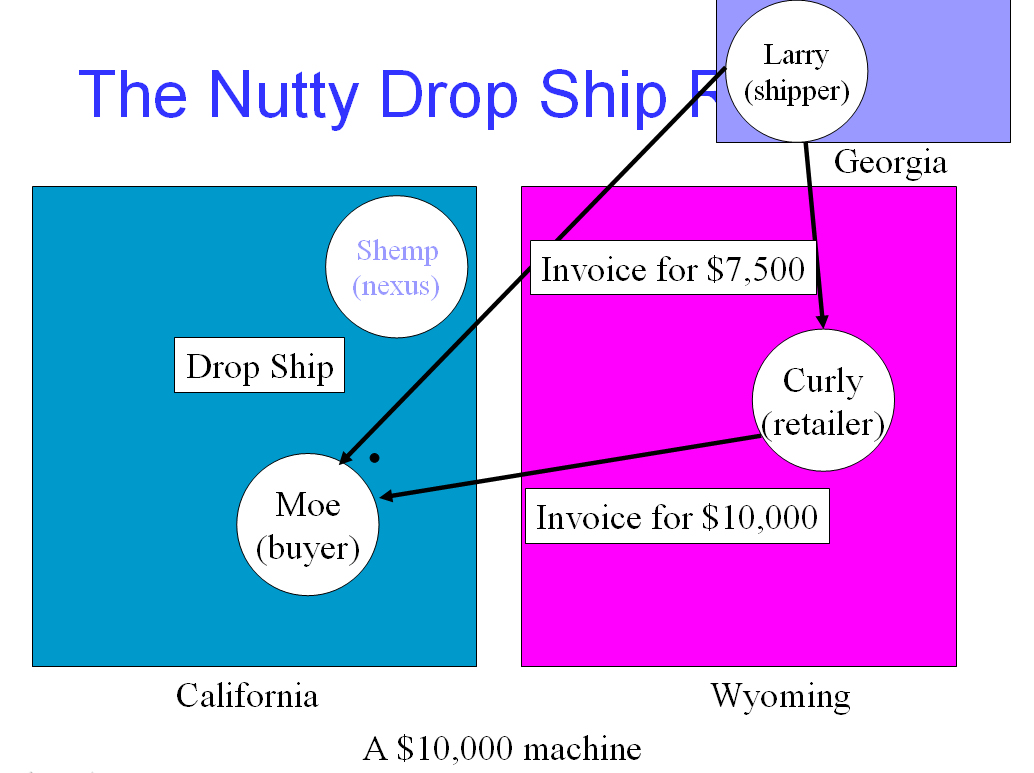
Here’s the problem.

- Moe (in California) orders goods from Curly, the retailer.
- Curly (in Wyoming) orders goods from Larry, the manufacturer or distributor.
- Larry (in Georgia, but with nexus in California) ships the goods to Moe.
- Larry bills Curly.
- Curly marks it up and bills Moe.
- Curly is registered ONLY in Wyoming, has a WY resale certificate and does NOT have nexus in California. Which means he doesn’t charge Moe any tax.

In, what I like to call, the “nutty” drop ship states (California is one of them), they require that Larry must charge CA tax to Curly, even though Curly is buying for resale. They will let Larry off the hook for the tax if Curly provides Larry with a California resale certificate (and CA registration number, of course). Curly doesn’t have this because he doesn’t have nexus in CA. And he doesn’t want to register in CA and therefore collect tax because he’ll loose any competitive advantage he has in CA, aside from the other problems with letting CA know he’s out there.

So Larry must collect the tax from Curly and Curly obviously has his margins squeezed. And he can’t pass on the tax to Moe because he’s not registered to collect tax in CA.

Moe also loses here because, since he has an invoice from Curly with no tax shown, the auditor will assess him for use tax on the purchase that Larry has already paid the tax on!

Many vendors (Larry) have been caught on this issue by NDSS (nutty drop ship states), so many of them just automatically follow these rules, regardless of whether they’re shipping to a NDSS or not. This causes problems for the Curlys of the world because they’re being forced to pay tax that isn’t truly due.

If you find yourself in this situation, I recommend that you research the NDSS situation in the ship-to state, and then challenge the vendor. Make them show you where they’re required to charge tax and show them what you’ve come up with. And of course, depending on the relationship you have with the vendor, don’t pay the tax.

There's more on this here

Sales Tax Guy
Of course, the usual disclaimers

Picture note: the illustration above is hosted on Flickr. If you'd like to see a larger version, click here


.tdropships

Thursday, September 28, 2006

What about Canada???

What about Canada? Yours truly knows about US sales and use tax - I don't want to even think about Canada, or (deep inhale) Mexico. Yet I get questions frequently on these two countries. So here's some advice:

1. Do a search on the following terms (or some variation that you like) :

canada
vat
sales tax
seminar
training

I did that and several items popped up that looked promising.

2. If you have a relationship with a large CPA firm (or law firm) like E & Y or Deloitte, check with them. They probably offer seminars that may be helpful. I know this because, when I did the above search, their names popped up.

So give it a try!

Sales Tax Guy

PS, you may have noticed a picture. Since I'm into photography, I thought I'd start making this blog more interesting by throwing a picture from my Flickr collection into the post that's relevent to the topic. That one is from the Columbia Ice Fields in Alberta. Click on the picture to see a bigger version of it on Flickr.

Tuesday, September 19, 2006

MN Computer Contracts

Greetings all - told ya I'd give you an update...
Here's the MN bulletin on this topic
http://www.taxes.state.mn.us/taxes/sales/publications/revenue_notices/content/93-17.shtml
Combined support and upgrade contracts are taxable at 20% of the total.

Jim

Thursday, August 17, 2006

For Seminar Participants - New Handouts Available

If you've been waiting for the latest version of the handouts to be posted, they're now available at the URL you were given in the seminar.

Jim

NC Manufacturers - A Clarification

For those of you in the seminar this week from NC, manufacturers DO get an exemption from the tax. They don't have tax collected from their purchases, and they don't have to remit use tax. BUT there IS that derned privilege tax.

Jim

Thursday, August 03, 2006

More on leasing with an operator

Here are a couple of more points to consider, which are VERY objective and may help with determining this transaction's taxability:

1. Was the equipment bought by the lessor for resale?
2. Is the lease payment based on how long the equipment is leased for as opposed to the successful completion of a job?

Sales Tax Guy

Thursday, July 20, 2006

Leasing TPP with an operator


With the help of some folks in a recent seminar, I think I've hit on a useful "rule of thumb" for dealing with the question of leasing equipment with an operator.

In most states, leasing of TPP is taxable. But the question is, if I get an operator for the equipment, two different taxation situations arise:

1. Am I still leasing a piece of equipment? If so, it's taxable (in most states); or
2. Am I hiring the services of an operator (which may or may not be taxable) and the equipment is just incidental to her service.

The problem is knowing when you've gone from situation1 to situation 2.

Here's the rule of thumb:

When the operator ONLY has control over the actual operation of the machine (pushing buttons, pulling levers, etc.) and has NO control over what is actually done with the equipment, then you're in situation 1; you're still leasing a piece of equipment and it's taxable (in most states).

When the operator not only has control over the operation of the machine, but decides how and where to use it, then you're probably hiring the services of the operator, and then you look at whether her services are taxable.

To summarize, if their control is limited to the console or cab of the machine, you're still leasing a machine. But if their control extends outside of the cab to the actual use of the machine, then you're probably hiring the services of the operator and the machine is something THEY use to perform that service. Then the question is: is that service taxable?

Of course, the specific rules in every state will be different.

Clear? Yeah, right.

Sales Tax Guy

The usual disclaimers apply